The Science of Haleakalā: Understanding the Volcano You’re Riding Down
The Science of Haleakalā: Understanding the Volcano You’re Riding Down

Riding down Haleakalā is not just an unforgettable adventure, it is a journey through one of the most fascinating volcanic landscapes on Earth. As you descend from the summit toward Maui’s coast, you are traveling across millions of years of geological history shaped by fire, time, and the forces beneath the Earth’s surface.
For riders joining Haleakalā Bike Tours, understanding the science behind the volcano adds a deeper layer of appreciation to the experience. From lava flows and cinder cones to rare ecosystems that exist nowhere else in the world, Haleakalā is far more than a scenic backdrop. It is a living classroom that tells the story of how Maui itself was formed.
What Type of Volcano Is Haleakalā?
Haleakalā is a shield volcano, a type of volcano formed by repeated eruptions of low viscosity lava that spreads out over long distances. Unlike steep, explosive volcanoes, shield volcanoes create broad, gently sloping mountains. This shape is exactly what makes biking down Haleakalā possible and enjoyable.
The volcano that makes up Haleakalā covers more than 75% of the island of Maui. Its massive size comes from countless eruptions that occurred over hundreds of thousands of years. Lava flowed slowly across the land, layering upon itself and gradually building the mountain you see today.
Although Haleakalā is often referred to as dormant, it is technically still considered active. The most recent eruption occurred around 1790, which is relatively recent in geological terms. While another eruption is unlikely anytime soon, the volcano remains an important area of scientific study.
Inside the Haleakalā Crater
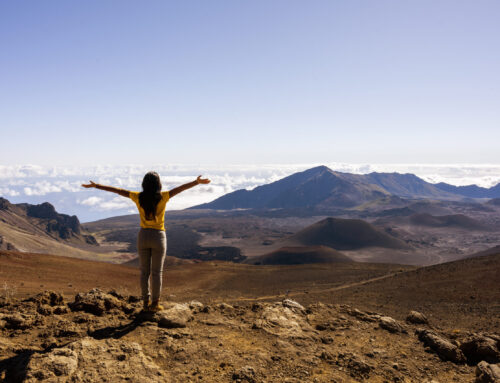
One of the most striking features of Haleakalā is its summit depression, often called a crater, even though it is not a traditional volcanic crater. This massive basin stretches about 7.5 miles long and 2.5 miles wide, with walls that drop thousands of feet.
The depression formed primarily through erosion rather than a single explosive eruption. Over time, rainwater and gravity carved deep valleys into the volcano, creating the dramatic landscape visible today. Inside the crater, you can see cinder cones, lava flows, and volcanic ash fields that reveal different stages of Haleakalā’s eruptive past.
As you bike along the slopes, the colors of the land change from deep reds and blacks to browns and greens. These colors come from different lava compositions and varying levels of oxidation. Each shift in color represents a different moment in the volcano’s long history.
Lava Flows and the Road You Ride On
The roads used for biking tours follow paths shaped by ancient lava flows. Basalt, the most common volcanic rock on Haleakalā, formed as molten lava cooled and hardened. Over time, these hardened flows created stable ground that could eventually support roads and vegetation.
Some lava flows are smooth and rope-like, known as pāhoehoe, while others are rough and jagged, called ʻaʻā. Although much of the rougher lava has been covered by soil or vegetation, it is still visible in many areas along the route.
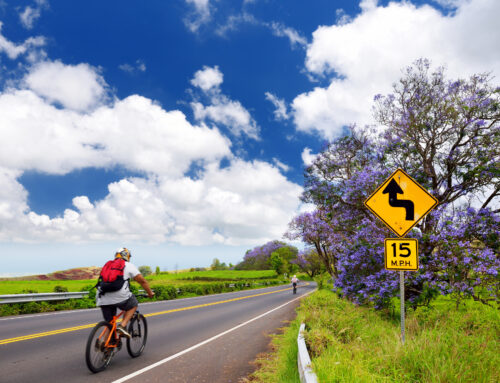
The gentle slope of the volcano allows riders to coast comfortably while taking in sweeping views of Maui’s coastline. This natural design is a direct result of how shield volcanoes grow, making Haleakalā uniquely suited for biking adventures.
Climate Zones on a Single Descent
One of the most remarkable aspects of biking down Haleakalā is the dramatic change in climate over a relatively short distance. Starting near the summit, conditions are often cool and dry, with temperatures that can feel closer to fall than a tropical island.
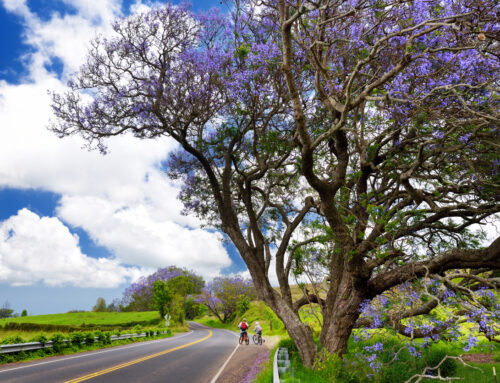
As you descend, warmer air and increased moisture support lush vegetation. Riders pass through shrublands, forests, and agricultural areas before reaching the lower elevations near the coast. These climate zones exist because elevation plays a major role in temperature and rainfall patterns.
Haleakalā National Park protects many of these ecosystems, some of which are home to endangered species found nowhere else on Earth. Plants like the silversword evolved to survive the harsh conditions near the summit, including strong winds, intense sun, and cold nights.
Why Haleakalā Is Sacred and Scientifically Important
Beyond its geological significance, Haleakalā holds deep cultural importance in Hawaiian tradition. According to legend, the demigod Māui stood atop the mountain and lassoed the sun to slow its movement across the sky. This story reflects the mountain’s role as a place of power and balance.
Scientists continue to study Haleakalā to better understand volcanic activity, erosion, and climate interactions. The volcano also hosts world class astronomical observatories near the summit, where clear skies and high elevation create ideal conditions for research.
When you ride down Haleakalā, you are moving through a place where science, culture, and natural beauty intersect. Respect for the land is an essential part of the experience.
Experiencing the Volcano With Haleakalā Bike Tours
Choosing Haleakalā Bike Tours allows riders to experience this incredible landscape in a way that is both educational and immersive. Knowledgeable guides help explain the volcanic features, climate changes, and cultural history that make the ride so meaningful.
As you descend, the mountain reveals its story layer by layer. The experience is not about speed, but about connection to the land and understanding how natural forces shaped the island over time. Every turn in the road offers a new perspective on Maui’s volcanic origins.
For many visitors, biking down Haleakalā becomes a highlight of their trip, blending adventure with learning and appreciation for one of Hawaii’s most iconic landmarks.
Riding Through Time on Haleakalā
A ride down Haleakalā is more than a scenic journey, it is a passage through millions of years of volcanic history. From ancient lava flows to modern ecosystems, the mountain tells a powerful story that unfolds with every mile. Experiencing this landscape by bike offers a unique way to connect with the science, culture, and natural beauty that define Maui.
Frequently Asked Questions About Haleakalā Bike Tours
Is Haleakalā still an active volcano?
Yes, Haleakalā is considered an active volcano, although it has not erupted since around 1790. Scientists continue to monitor it, but the chances of an eruption during a tour are extremely low.
Do I need to be an experienced cyclist to ride down Haleakalā?
No, most Haleakalā bike tours are designed for riders of varying experience levels. The ride is mostly downhill, and guides provide safety instructions and support throughout the journey.
At Mountain Riders, we are passionate about sharing the natural beauty and history of Maui through unforgettable biking experiences. Our guided tours combine adventure, education, and respect for the land. If you are ready to explore Haleakalā in a meaningful way, contact us today to book your tour.